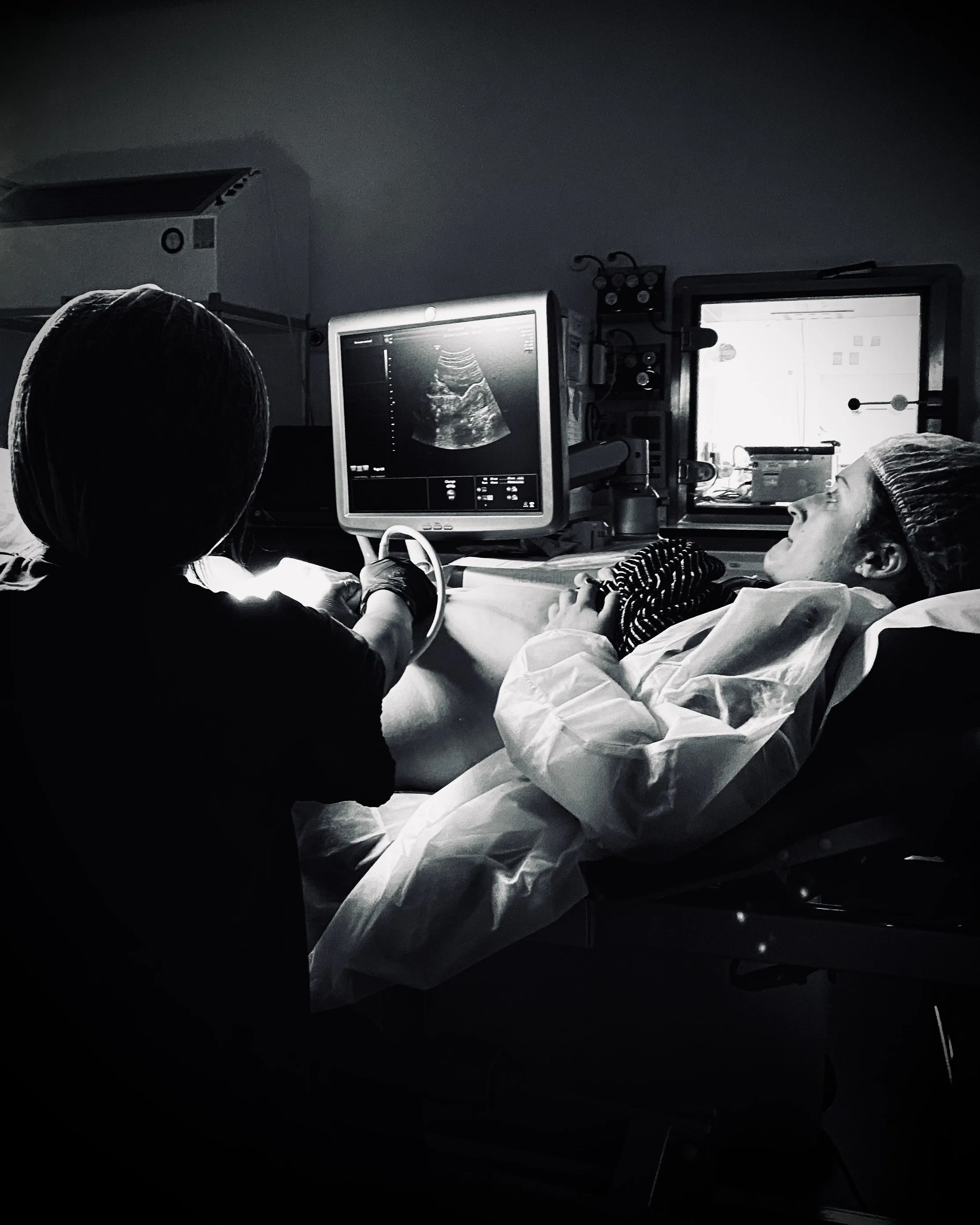
When people talk about IVF, they often talk about the medical procedures, the injections, the appointments and, of course, the hope of getting pregnant.
But there is so much more to it than that.
The practical realities of going through fertility treatment can take over almost every part of your life, and I don't think we talk about them enough.
Let's start with the money.
IVF is expensive, but it's not just the cost of the treatment itself.
There are the unexpected scans, additional medication, travel, flights, taxis and accommodation. We travelled to Alicante for treatment, and those costs soon added up.
Then there's the loss of earnings. As someone who is self-employed, taking time off for procedures, appointments and recovery meant losing income. And sometimes recovery took longer than expected. Failed cycles and negative pregnancy tests also meant days when I simply wasn't in the right place emotionally to work.
On top of that, there were supplements, pregnancy tests, acupuncture and kinesiology.
We found ourselves putting off holidays because we needed to keep money available for the next unexpected expense. There were even times when we couldn't justify a simple bus or train journey to visit family or friends, just in case we needed that money for another £90 ultrasound.
It's difficult to explain how much of your life becomes governed by the possibility of another bill.
Then there's the mental load.
Trying to keep track of medication dates, timings and doses. Learning how to mix medication and prepare injections. Remembering what needs to happen and when.
Making huge decisions, often with an enormous emotional weight attached to them, while trying to keep yourself together.
Making excuses to leave a room for a private phone call that might bring difficult news. Explaining why you can't lift something heavy when normally you wouldn't think twice about it.
Trying to work out what exercise is safe before, during and after treatment. Wondering whether something you do, or don't do, might affect your chances.
And then there's all the other things you start questioning.
Food and drink. Supplements. Deodorant. Shampoo. Body wash. Cleaning products. Pots and pans. The kettle.
We changed so many things in the hope that we were doing everything possible to give ourselves the best chance.
We even had a holiday to Mexico cancelled because of medical advice around the Zika virus. We were also told that stopping trying during that time could affect our eligibility for NHS IVF, which depended on having been trying for three years.
Even when we eventually travelled to Alicante for treatment, we had to be careful. I remember sitting on the beach, sweating, trying not to get too hot, while avoiding going into the sea because of the risk of infection.
Everyone else was enjoying their holiday. I was just trying to do everything right.
And then there are the physical reminders: bruises on your stomach from injections, bruises on your hands and in the creases of your elbows from blood tests and IVs.
It's a lot to carry, physically, mentally, emotionally and financially.
And somehow, you're still expected to carry on as normal.
Go to work. See friends. Attend family events. Be happy for other people's pregnancy announcements and births.
And I genuinely am happy for people. I know better than most what a miracle it is to have a baby.
But I can't pretend it didn't hurt that, after everything we went through, I never got to make that announcement myself.
I also wish there were more understanding and support for people who are self-employed and going through IVF. Taking time off isn't always straightforward when your income depends on you being there. There isn't necessarily sick pay, paid leave or someone to cover your work.
We hear so much discussion about women having children, not having children, prioritising careers or supposedly leaving it too late. But what about the women who desperately want children and are trying everything they can to make that happen? Where is the support for them?
And perhaps the hardest thing I've learned is that the practical and emotional impact doesn't simply stop when treatment ends.
It's been over a year since we stopped trying, but my mind hasn't completely caught up.
I'm now experiencing early perimenopause, and if my period is even a couple of days late, some little part of my brain still thinks:
Could I be pregnant?
Realistically, the chances are incredibly small. It would be an absolute miracle.
But after seven years of hoping, waiting and watching for signs, I don't think my brain knows how to switch that feeling off.
And then my period arrives, and there's another little wave of grief.
I don't know how long it will take for that instinctive hope to leave me.
There's one particular memory that I don't think I'll ever forget.
When we finished IVF, we were left with all the unused medication and needles from our six rounds of treatment. I was told I needed to return everything to the hospital, which of course made sense. You can't just throw medication and needles away.
But when I arrived, I wasn't allowed to leave everything at reception. I was told to take it to the blood room.
That meant walking back through the hospital waiting area, past all the individuals and couples waiting for appointments and treatment, including people who were pregnant.
I was carrying the medication and needles from a journey that had just come to an end, surrounded by people who were still in the middle of theirs.
It was heart breaking.
That waiting room is already an incredibly difficult place to sit when you're hoping for good news. Having to walk back into it knowing that your own journey is over, with all the physical reminders of treatment in your hands, was something I found deeply traumatic.
I wish there had been a little more thought about how that might feel.
I think this is something I really want people to understand.
Just because someone's fertility journey has ended, it doesn't mean they've forgotten it. It doesn't mean they've moved on. And it certainly doesn't mean the emotional impact has disappeared.
Over the past eight years, I've sometimes felt as though I've been difficult. That I've had to say no too often, remove myself from situations or put my own feelings first.
But I promise you, I wish I hadn't had to.
I've tried my hardest to celebrate other people's happiness, pregnancies and successes. But sometimes, in order to get through something like this in one piece, you have to put your blinkers on. You have to protect yourself and your partner. You have to be a little selfish.
Not because you don't care about other people.
But because you're fragile, you're hurting, and sometimes that's what survival looks like.
So, if someone going through infertility turns down an invitation, doesn't respond to a message, needs to leave early or can't share in your excitement in the way they normally would, please try not to take it personally.
It doesn't mean they don't care.
It doesn't mean they're not happy for you.
It may simply mean that, right now, they're doing everything they can to hold themselves together.
Sometimes looking after yourself isn't selfish. It's necessary.
And please remember that the support someone needs doesn't necessarily end when the treatment does.